Contents
Is Microsoft 365 secure? Only as long as no one launches a targeted attack.
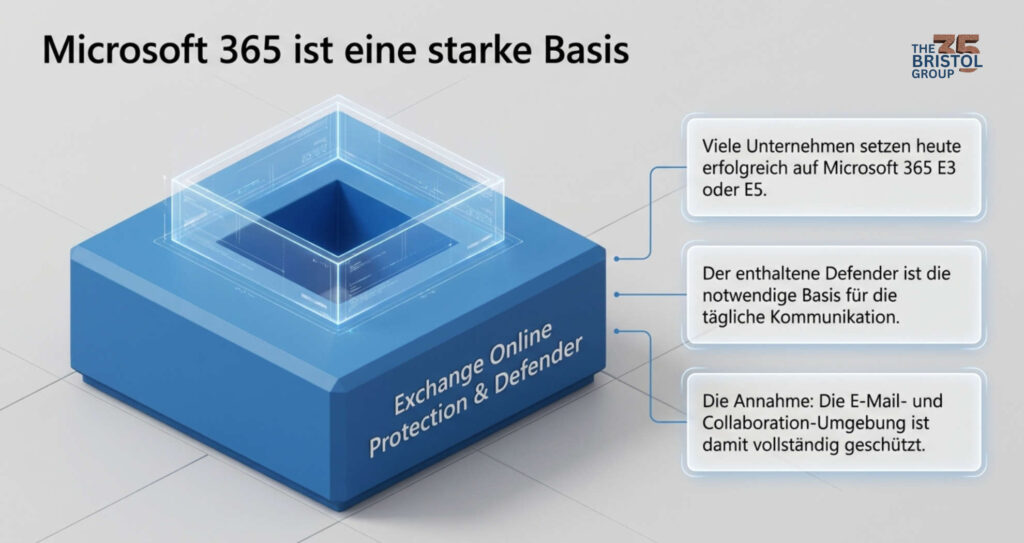
Many companies today rely entirely on the security features of Microsoft 365. After all, Microsoft invests billions in cybersecurity, and with Microsoft 365 E5—if not before—the security question seems to be answered at first glance: Defender, Threat Intelligence, Safe Links, Safe Attachments—it sounds comprehensive. Problem solved, right? Not quite.
The uncomfortable truth is this: Microsoft 365 is designed for maximum productivity but isn’t automatically sufficiently protected—especially when attackers take a targeted approach. Anyone who believes that an E3 or even an E5 plan alone can reliably stop modern threats is underestimating the reality of today’s cyberattacks.
🎤 Webinar | The Security Vulnerability in Microsoft 365
Together with an expert from Check Point, we’ll take a practical look at modern attacks targeting Microsoft 365, business email compromise, and collaboration security. Learn why E3 and E5 provide a strong foundation and where modern attack scenarios still create vulnerabilities.
➤ GO TO THE WEBINARThe misconception: “We have E5, so we’re safe”
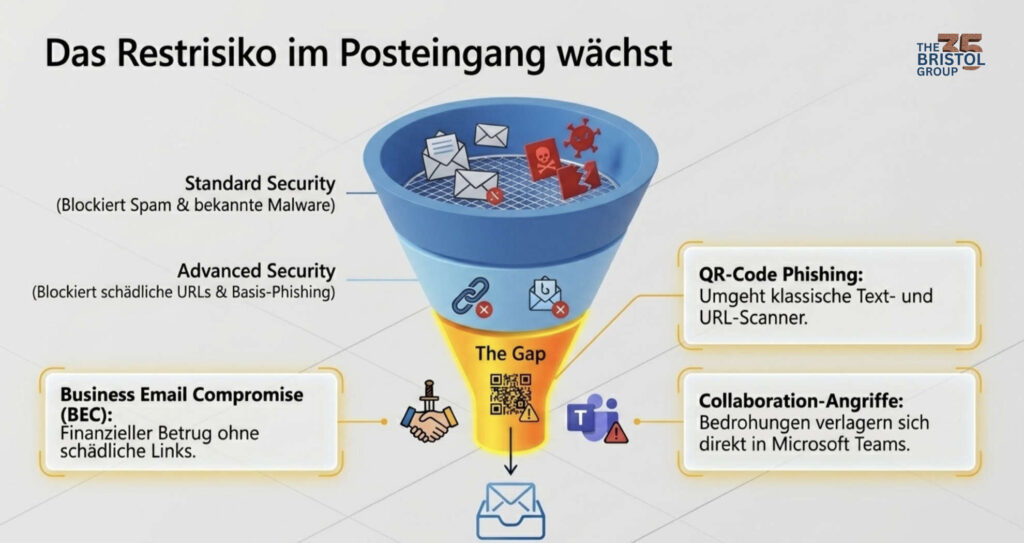
Many security solutions continue to focus on known malware, malicious attachments, or traditional phishing links. However, it is precisely these attacks that are increasingly being replaced by modern social engineering methods. Business Email Compromise often works entirely without malware or malicious links. Instead, attackers exploit trust, genuine communication patterns, and human decision-making. This becomes particularly dangerous when it comes to payment approvals, identity changes, or manipulated internal requests.
At the same time, QR code phishing campaigns are on the rise. Traditional URL scanners and text analysis tools are often no longer reliable in these cases, since the actual link is hidden behind the QR code.
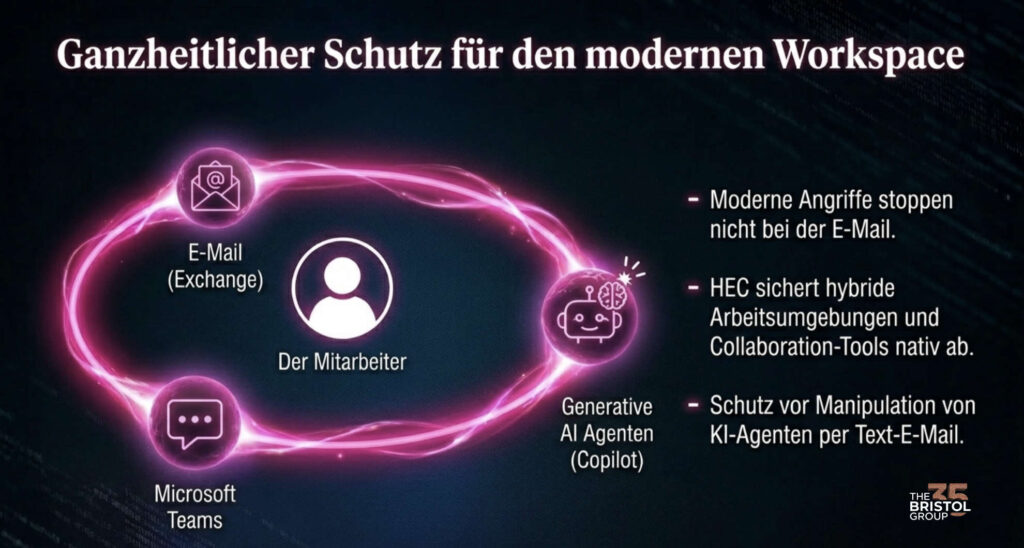
There is another trend to consider. Attacks are increasingly shifting directly to collaboration platforms such as Microsoft Teams. Communication there seems more familiar, faster, and less suspicious than traditional emails. This is precisely what creates new vulnerabilities that have largely been overlooked in many security strategies to date. The actual residual risk therefore often arises not from known threats, but precisely in the gap between traditional email security, collaboration platforms, and modern social engineering attacks.
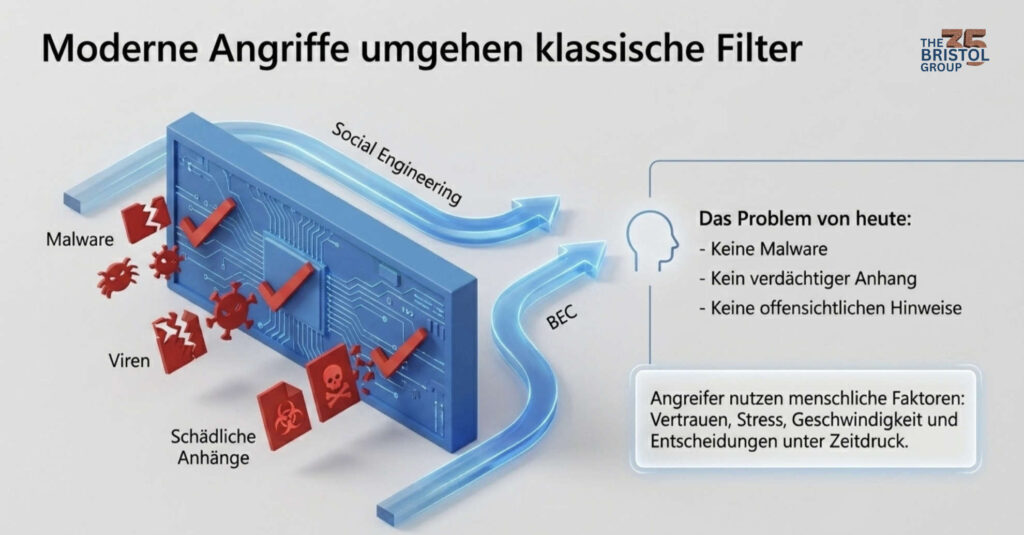
Check Point Workspace Email & Collaboration complements Microsoft 365 precisely where modern attacks originate
The most important insight in modern email security today is no longer “either/or,” but rather “complement rather than replace.”
Microsoft 365 remains the cornerstone of modern communication and collaboration. That is precisely why Check Point Workspace E-Mail & Collaboration does not take a competitive approach, but rather specifically enhances existing Microsoft 365 environments with additional protection mechanisms designed to address modern attack scenarios.
The focus here is on preventive security. Check Point not only detects traditional threats but also specifically addresses the risks associated with business email compromise, social engineering, QR code phishing, and collaboration attacks. Of particular relevance is its ability to take modern communication patterns and contextual information into account to a greater extent. This creates an additional layer of security without requiring fundamental changes to existing architectures or processes.
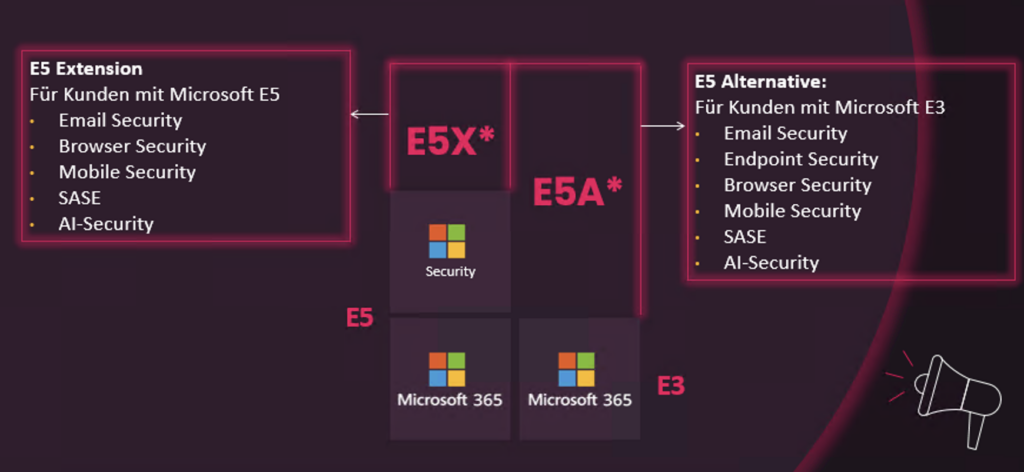
Modern email security is determined before delivery
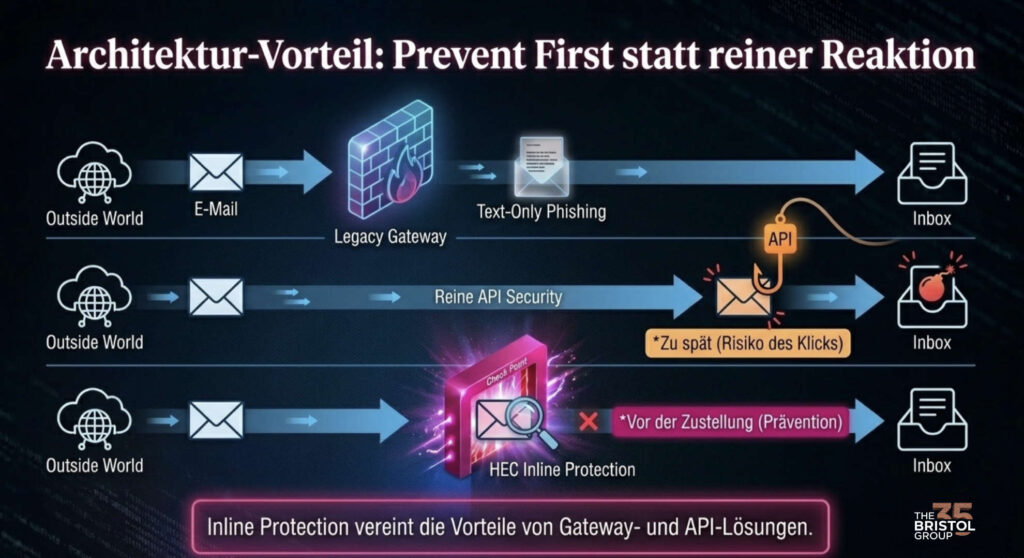
Check Point Workspace Email & Collaboration takes the following approach. With what is known as “inline protection,” communications are analyzed and evaluated even before they are delivered. In this way, Check Point combines the advantages of traditional gateway security with modern API mechanisms, creating a preventive security architecture rather than a purely reactive solution.
The difference is crucial:
Don't wait until the user clicks to react.
Instead, identify risks before the message even lands in the inbox.
Check Point Workspace Email & Collaboration extends protection to where modern attacks are taking place today.
Check Point Workspace Email & Collaboration specifically enhances the E3 and E5 editions with preventive security, context analysis, and advanced protection against modern BEC, QR code, and collaboration attacks. The focus is not on increasing complexity, but on reducing residual risk in day-to-day operations.
Leading Security Status Confirmed by Gartner
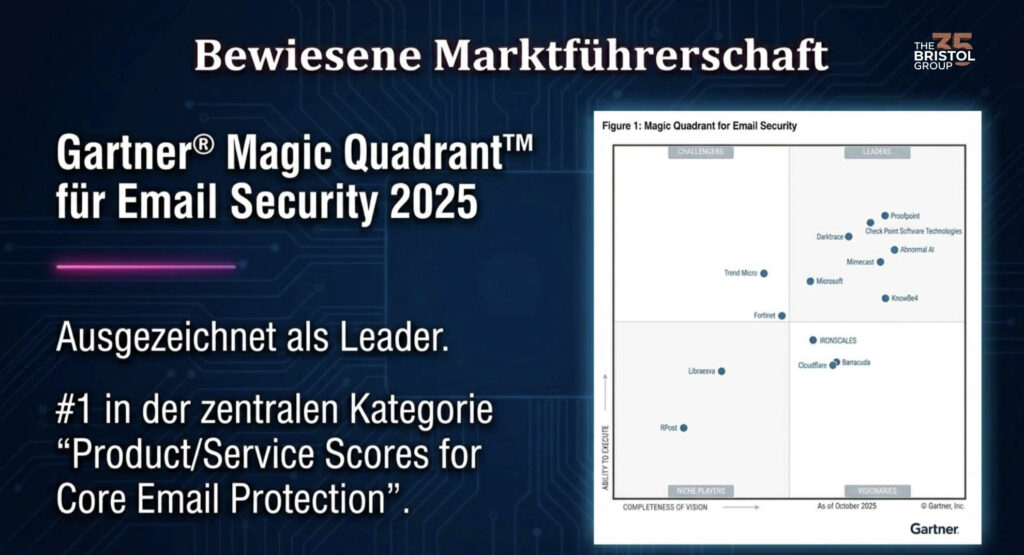
Check Point was named a Leader in the 2025 Gartner Magic Quadrant for Email Security and ranked first in the “Core Email Protection” category. The evaluation shows that modern email security is no longer defined solely by traditional filters, but rather by preventive protection mechanisms, context analysis, and the ability to counter modern attack methods.
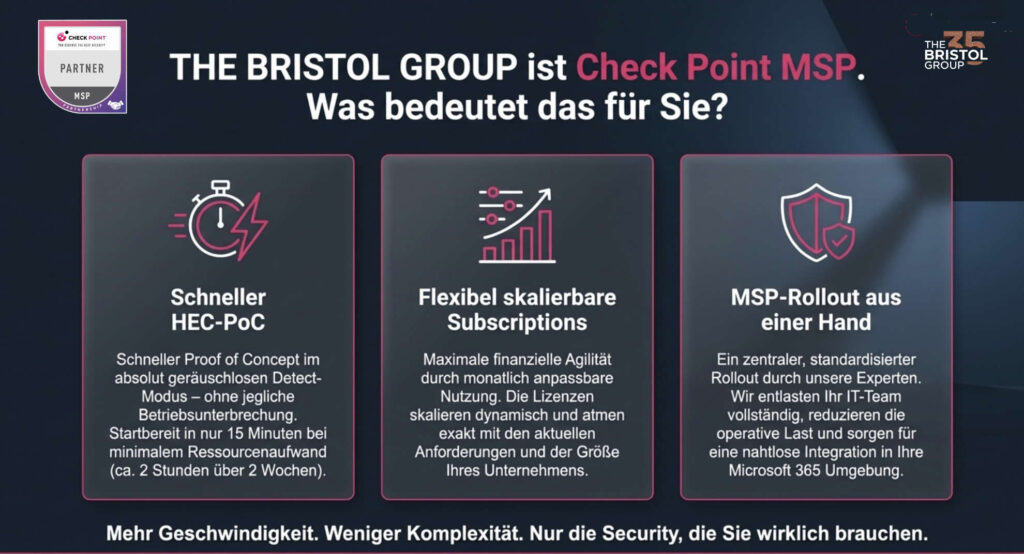
The Bristol Group is an official Check Point MSP partner
As an official Check Point MSP partner, the Bristol Group helps companies quickly and effectively implement Check Point solutions—from proof of concept and managed services to full integration into existing IT and Microsoft 365 environments. Would you like to test or evaluate a solution? Together, we’ll implement proofs of concept quickly, easily, and with minimal effort on the part of your IT team.